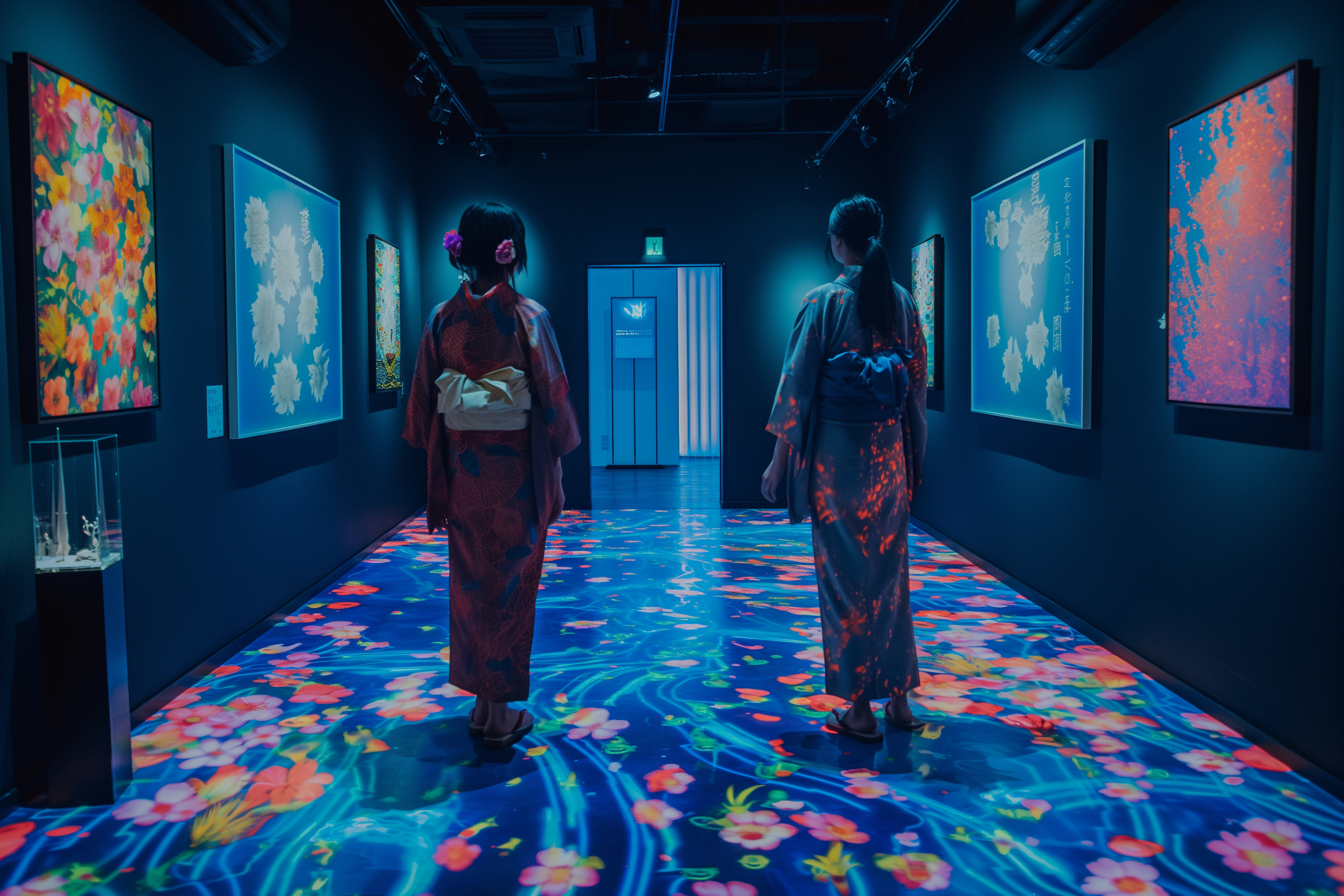
The global rise of artificial intelligence has reshaped how artists create, organize, and exhibit visual work. The term ai art exhibition now appears everywhere—from New York and Tokyo to Berlin, Los Angeles, Dubai, and Seoul. What started as scattered digital showcases has evolved into international festivals, immersive multi-sensory galleries, and cutting-edge museums featuring fully algorithmic visual pieces.
AI-based artworks have gained recognition not only for their technical precision but also for their emotional resonance, surprising unpredictability, and the collaboration they foster between human creators and machine assistants. Many of these exhibits allow visitors to interact with neural networks, generate their own portraits, or influence live digital canvases through sound, movement, or biometric sensors.
Before diving into notable events, it is worth mentioning that many creative communities now rely on digital assistants to prepare applications, write artist statements, and format project proposals. A helpful example is the tool discussionpostwriter.ai, which many emerging digital artists use to refine submissions for upcoming festivals.
Major AI Art Exhibitions Around The World
Across the globe, museums and creative centers have begun dedicating entire wings or festival programs to AI-generated art. Several influential events have defined the last decade of innovation in digital expression.
1. “AI: More Than Human” — Barbican Centre, London
One of the world’s most comprehensive explorations of AI in culture, “AI: More Than Human,” ran at the Barbican Centre and toured several global cities afterward. It featured interactive installations, deep-learning sculptures, and neural networks that responded in real time to visitors’ voices, movements, and emotions.
The exhibition blended philosophy, science, and art, giving viewers a historical trajectory of AI development. It demonstrated how algorithms can become creative partners rather than mere tools.
2. “Unsupervised” by Refik Anadol — Museum of Modern Art (MoMA), New York
One of the most famous examples of an AI-generated artwork displayed in a major museum, “Unsupervised” used MoMA’s own digitized archive as training data. Through advanced machine-learning models, the installation continuously reinterpreted decades of art movements.
Viewers witnessed swirling, evolving imagery that shifted at each moment—no two iterations were ever the same. This brought global attention to the idea of museums curating living, constantly changing AI artworks.
3. “Artificial Imagination” — Tokyo Digital Art Museum
Japan has been a leader in merging technology and art. “Artificial Imagination” brought together AI-painted landscapes, generative anime, and robot-assisted sculpture. Visitors could walk through rooms where digital brushstrokes responded to footsteps, creating a sense of painting inside a living algorithm.
The exhibition also included collaborative workshops where artists learned to train custom GANs, reinforcing the idea that AI can strengthen creativity rather than replace it.
4. “Future Visions: AI And Human Creativity” — Berlin Art Week
Berlin’s annual Art Week often features an entire segment dedicated to AI. One standout edition, “Future Visions,” showcased works that explored socio-political narratives, identity, and memory. AI models created haunting portraits, fictional urban landscapes, and datasets reinterpreting world history.
5. “Neural Threads” — Seoul, South Korea
Seoul has become a hotspot for avant-garde digital art. “Neural Threads” was an immersive blend of holography, algorithmic fabrics, and interactive light systems. Korean artists integrated AI with fashion, sound design, and performance art—allowing attendees to wear garments that visualized real-time neural processing.
Upcoming AI Art Exhibitions in 2025–2027
The growth of AI-generated art continues accelerating, and several large-scale events have already announced future plans.
- AI Seoul Festival — Planned expansion to include multi-city digital showcases.
- Digital Venice Biennale — Exploring algorithms in modern Italian art culture.
- Art Dubai Digital Pavilion — Focused on AI + Middle Eastern creative fusion.
- Los Angeles Generative Future Summit — Scheduled for 2026.
- Paris Immersive AI Salon — Debuting new interactive neural installations.
Many organizations now collaborate with universities, digital labs, and indie creators to feature emerging AI talent. These events often offer open submissions, residencies, and even grants for artists experimenting with machine learning.
How To Participate In An AI Art Exhibition
Getting your work into an ai art exhibition is more achievable than ever. The majority of AI-focused galleries and festivals welcome both established and new creators. Here are the most reliable ways to enter or showcase work.
1. Submit To Open Calls
Many AI exhibitions publish open calls several months before an event. Websites like ArtConnect, CuratorSpace, and museum newsletters often list new opportunities. Most applications require:
- A portfolio or sample AI artworks (images or video)
- An artist statement
- A description of the technique or model used
- A short biography
2. Join Artist Residencies
Digital residencies are increasingly connected to AI art events. Institutions in Europe, Asia, and North America frequently invite artists to work with machine-learning researchers, roboticists, and audiovisual designers. Works created during these programs are often guaranteed exhibition space.
3. Collaborate With AI Labs
Tech companies and universities host creative challenges where participants produce artwork using newly released tools, diffusion models, or experimental algorithms. Winners are sometimes offered exhibition placements or travel stipends.
4. Attend Networking Events
AI art communities thrive on collaboration. Meeting curators, digital artists, and programmers at festivals increases your chances of being invited to future shows. Many exhibitions also host seminars, VR meetups, and real-time creation workshops.
How To Attend AI Art Exhibitions As A Visitor
Visiting an ai art exhibition is usually straightforward. Most events offer online ticketing, timed entry, and multi-room experiences. Here is how to secure your spot:
- Follow exhibition websites and social media pages for announcements.
- Buy early-access tickets (AI exhibits often sell out).
- Look for student discounts or weekday passes.
- Arrive early to explore interactive rooms before crowds build.
Larger festivals sometimes offer VIP passes that include artist talks, behind-the-scenes walkthroughs, or early previews of new installations.
The Future Of AI Art Exhibitions
The next generation of AI art exhibitions will likely integrate:
- Biometric-responsive canvases (heart rate, gaze tracking)
- AI-guided audio tours generated in real time
- Collaborative human-machine live performances
- Holographic projection mixed with generative models
- Hyper-personalized installations based on visitor preferences
Museums are also experimenting with using AI to archive, curate, and restore classical artwork. As these technologies expand, the boundary between audience and artist will become even more fluid.
Conclusion
The world of ai art exhibition continues to grow into one of the most exciting frontiers in modern creativity. From immersive installations in New York to experimental showcases in Seoul and Berlin, AI has become a genuine artistic collaborator. Whether you want to participate as a creator or simply enjoy the visual experience, the opportunities are expanding every year.
← Back to Homepage